
BMI Has Done Us Dirty
Why the number on the scale is lying to you, and what to measure instead.

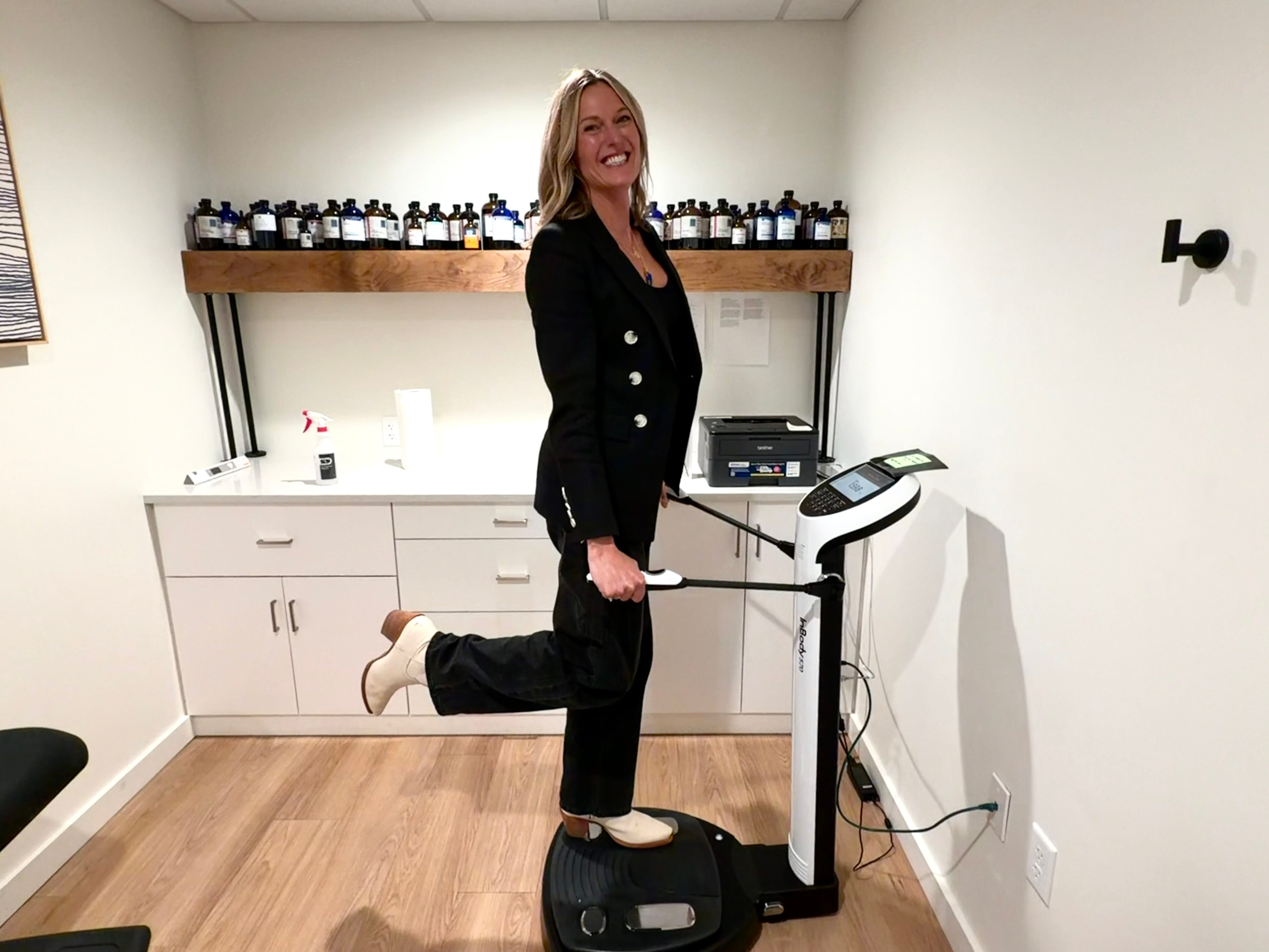
A few weeks ago, Mr. Wagner came into the clinic to do an InBody Scan.
He took off his shoes, stepped on the machine and reviewed his results with one of our staff members, Steph. She was shocked when he said,
“Okay, this proves that I have to lose weight to improve my BMI.”
His Garmin watch had told him that to lower his biological age, he needed to hit a certain BMI — and his was too high. So in his head, the math was simple. If he lost weight, his BMI would go down and he would live longer. It was a reasonable assumption.
Except his InBody scan said something completely different. His muscle mass was above average. His belly fat was low and his total body fat was healthy. By every measure that actually matters, he was in excellent shape.
Steph looked at John and said “John, you don’t need to change a thing. Your body composition is perfect.”
This is exactly how BMI has done us dirty.
What BMI Actually Is
BMI is an antiquated measurement that was never meant to assess an individual’s health. It was developed in the 1830s for population statistics — a tool to study groups of people, not individual patients.
And yet, it’s still used everywhere. At the doctor’s office, on our insurance forms, on our smartwatches. It’s a simple equation based on weight and height that ignores everything that actually determines whether you’re healthy like your muscle, your belly fat, and your total body composition.
It tells you nothing about what your body is made of.
Where BMI Gets It Wrong
Have you ever heard the term “skinny fat?”
It describes someone who looks thin, feels great about their weight, and underneath is a metabolic mess. They have low muscle mass and high visceral fat (the dangerous kind that wraps around the liver, pancreas, and intestines), leading to systemic inflammation and insulin resistance quietly brewing in the background.
I see this all the time. The woman who runs every day and has a “perfect” BMI but almost no muscle. Or the man whose weight on the scale is ideal but his belly fat is high. They feel healthy because old measurements are not telling them the truth. Their clothes fit, their BMI is normal and their doctor never notifies them that something is off.
On the other end of the spectrum, you have people like John. Heavy muscle, healthy fat, strong as hell, and convinced they’re overweight because the scale and the BMI chart said so.
Both groups are flying blind. They’re just blind in opposite directions.
Why Body Composition Is What Actually Matters
Muscle is medicine.
It does so much more than help you lift heavy things. It regulates your blood sugar and drives a healthy metabolism. It protects your bones. It predicts whether you’ll be able to ski, hike, lift your grandkids, and move through the world with ease in your seventies and eighties. And of course it makes you look good - but I consider that icing on the cake.
You don’t train for the body you want at fifty. You train for the life you want to be doing at seventy.
Body fat matters too, but not in a way most people understand. Excess fat, especially when it collects around your organs, drives inflammation, weakens insulin and blood sugar regulation, and is linked to fatty liver, heart disease, and dementia. It’s not about how you look. It’s about what’s happening on the inside.
This is why, at Wagner Integrative Health, we look at body composition long before we look at weight or BMI. The scale is a single data point. Body composition is the actual story.
A Word About GLP-1 Medications
This deserves its own section because I am watching it play out in real time.
GLP-1 medications like Ozempic, Mounjaro, Wegovy can produce real, fast weight loss. The number on the scale drops. Patients are thrilled. Their BMI improves. Their doctor is pleased.
But here’s what’s happening underneath. These medications can accelerate muscle loss alongside fat loss. Sometimes dramatically. So while the scale is moving in the “right” direction, the body is losing the very tissue that protects long-term health.
What looks like a win on paper can be a serious problem in the body.
If you’re on a GLP-1, you need to be tracking body composition, not just weight. You need to be eating enough protein. You need to be lifting. Otherwise you’re going to come off the medication thinner, weaker, more metabolically fragile, and more vulnerable to disease than when you started.
This is the conversation almost no one is having. And it’s the one I’m having every week.
How to Actually Measure What Matters
The gold standard is a DEXA scan, which uses low-dose X-ray technology to give you the most accurate picture of muscle, fat, and bone. Because it uses radiation, it’s not something to do frequently, but once or twice a year is reasonable.
In our clinic, we use the InBody scan. It uses bioelectrical impedance, which is a tiny electrical current that runs through the body to estimate muscle, fat, and water. It’s quick, painless, and a great way to track changes over time.
If you want to measure at home, the Hume scale has been on my radar and the patients using it have been happy with the results.
What to Do With This
The next time you step on a scale and feel either crushed or relieved by the number that comes up, pause.
That number isn’t telling you whether you’re healthy. Neither is your BMI, and neither is the readout on your smartwatch.
Stop asking what you weigh. Start asking what you are made of.
And honestly? It’s where the next decade of your health is going to be decided.
Live well. Feel alive.
Dr. Lynn Wagner